Choose what would you like to do with your Website Design
Web Design






Types of Websites

HTTP (Hypertext Transfer Protocol)
The foundation of data communication on the World Wide Web. It is the protocol used for transferring hypertext requests and information between web browsers and servers.

HTTPS (Hypertext Transfer Protocol Secure)
An extension of HTTP with added security features, using SSL/TLS protocols to encrypt data transmitted between the browser and the server.

Web Browsers
Software applications that retrieve and display web pages. Examples include Chrome, Firefox, Safari, and Edge.

Web Servers
Software or hardware that stores, processes, and serves web pages to users. Examples include Apache, Nginx, and Microsoft IIS.

DNS (Domain Name System)
A system that translates domain names into IP addresses, allowing users to access websites using human-readable names.

Web Hosting
Services that provide space on the internet for websites. Hosting providers offer storage, bandwidth, and other resources to make websites accessible.

REST (Representational State Transfer)
An architectural style for designing networked applications, commonly used in web services development.

JSON (JavaScript Object Notation)
A lightweight data-interchange format often used for asynchronous browser/server communication.
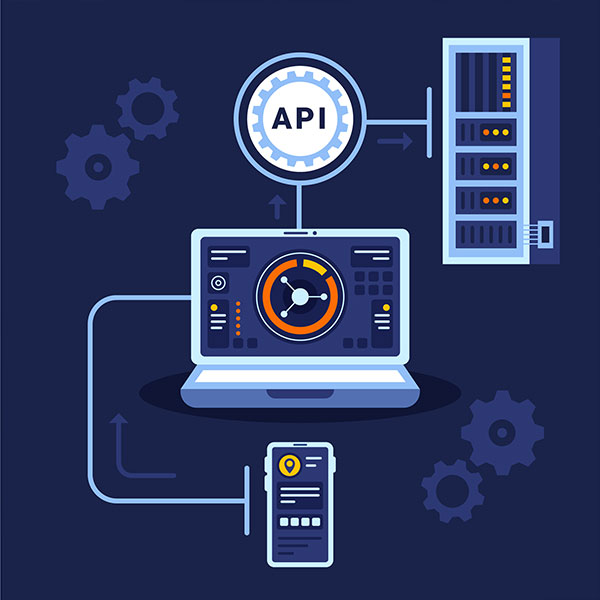
Web APIs (Application Programming Interfaces)
Interfaces that allow different software applications to communicate with each other. Web APIs are commonly used for integrating third-party services into websites.

Web Frameworks
Libraries or frameworks that provide pre-built code and tools to simplify and speed up web development. Examples include React, Angular, Vue.js (for front-end), and Django, Flask, Ruby on Rails (for back-end).
Web Standards
Guidelines and specifications set by organizations like the World Wide Web Consortium (W3C) to ensure consistency and compatibility in web development. Examples include HTML5, CSS3, and ECMAScript.